What causes black streaks on my roof?
Understanding why your roof looks so bad.
1/20/20261 min read
What Causes Black Streaks on Roofs?
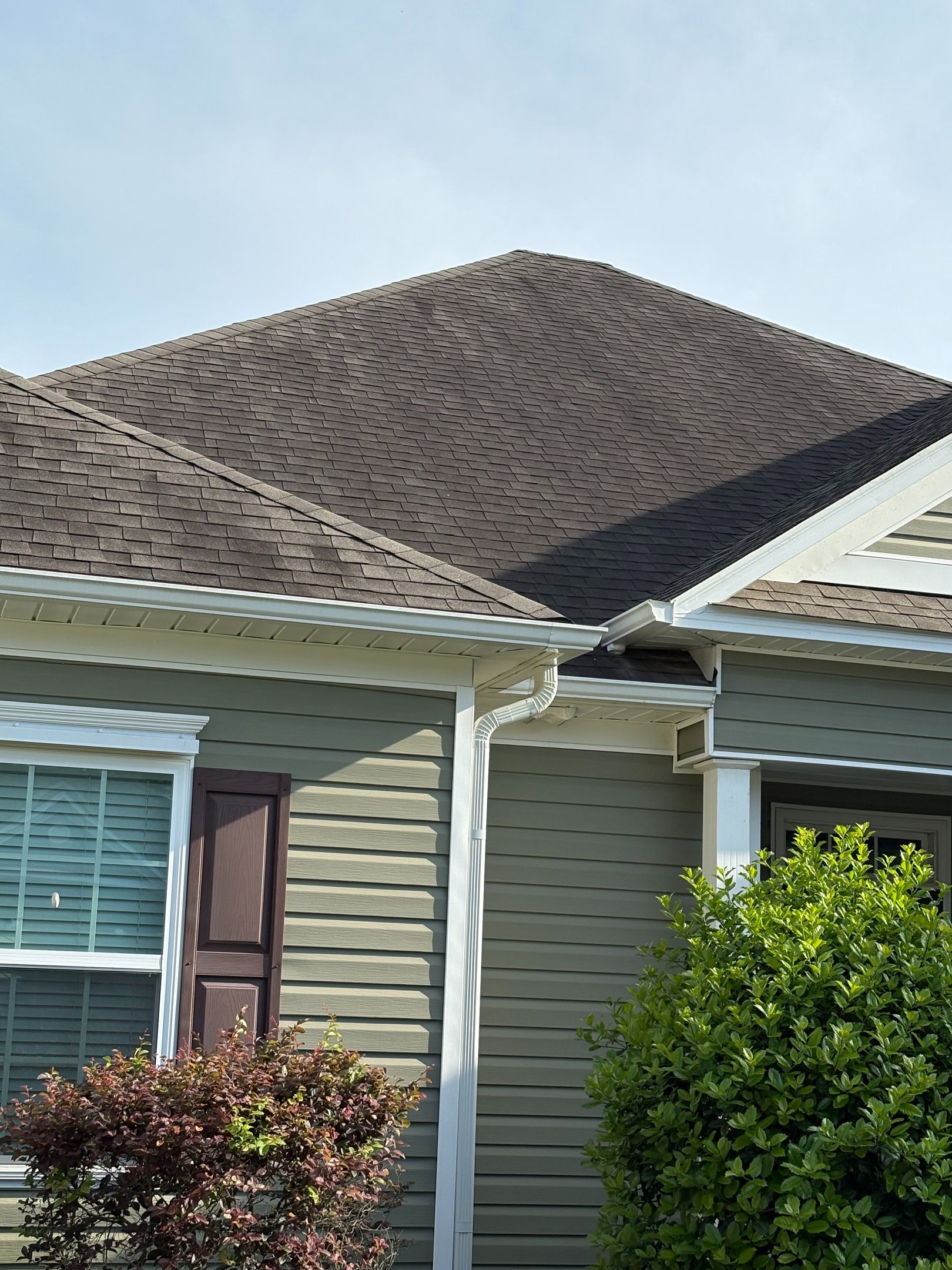
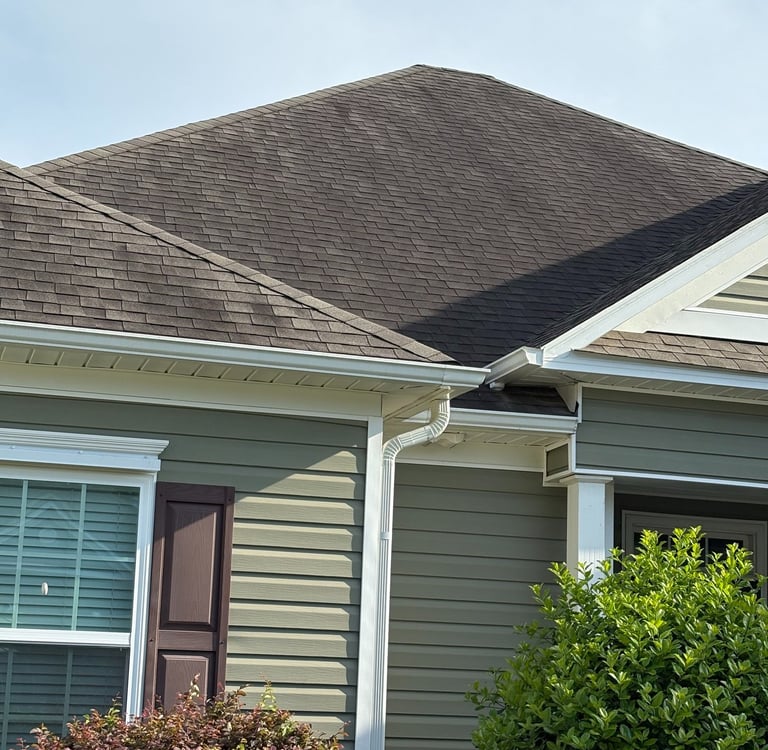
Those black streaks running down your roof aren’t dirt or age. They’re caused by a type of algae called Gloeocapsa magma. Just like algae grows on your siding or driveway year after year it also grows in and on the pores of the roof.
This algae feeds on the limestone filler found in asphalt shingles. It spreads through airborne spores and thrives in warm, humid, and coastal environments—making it especially common in areas near the ocean. It can also grow into or contribute to moss growth in the shingle seal lines causing premature failure to the shingle bondline.
As it grows, the algae forms dark protective layers that create the streaked appearance homeowners notice. Beyond looks, it can:
Hold moisture against the roof surface
Increase heat absorption
Accelerate shingle aging
Make your roof appear in much worse condition than it actually is
Rain won’t wash it away. In fact, rain helps the algae spread to new areas of the roof.
The most effective way to address black streaks is through soft washing, which treats the root cause rather than just rinsing the surface. From a roofing standpoint, removing algae isn’t just about aesthetics—it’s about reducing long-term wear on the roof system.